New Concrete Driveways
A new concrete driveway that drains, carries what you park and lasts
Most of a driveway's life is decided before the concrete arrives. We dig to firm ground, build and compact the base, form it to slope away from the house, set steel sized to what you park, then pour, finish and cut control joints so cracks follow the lines.
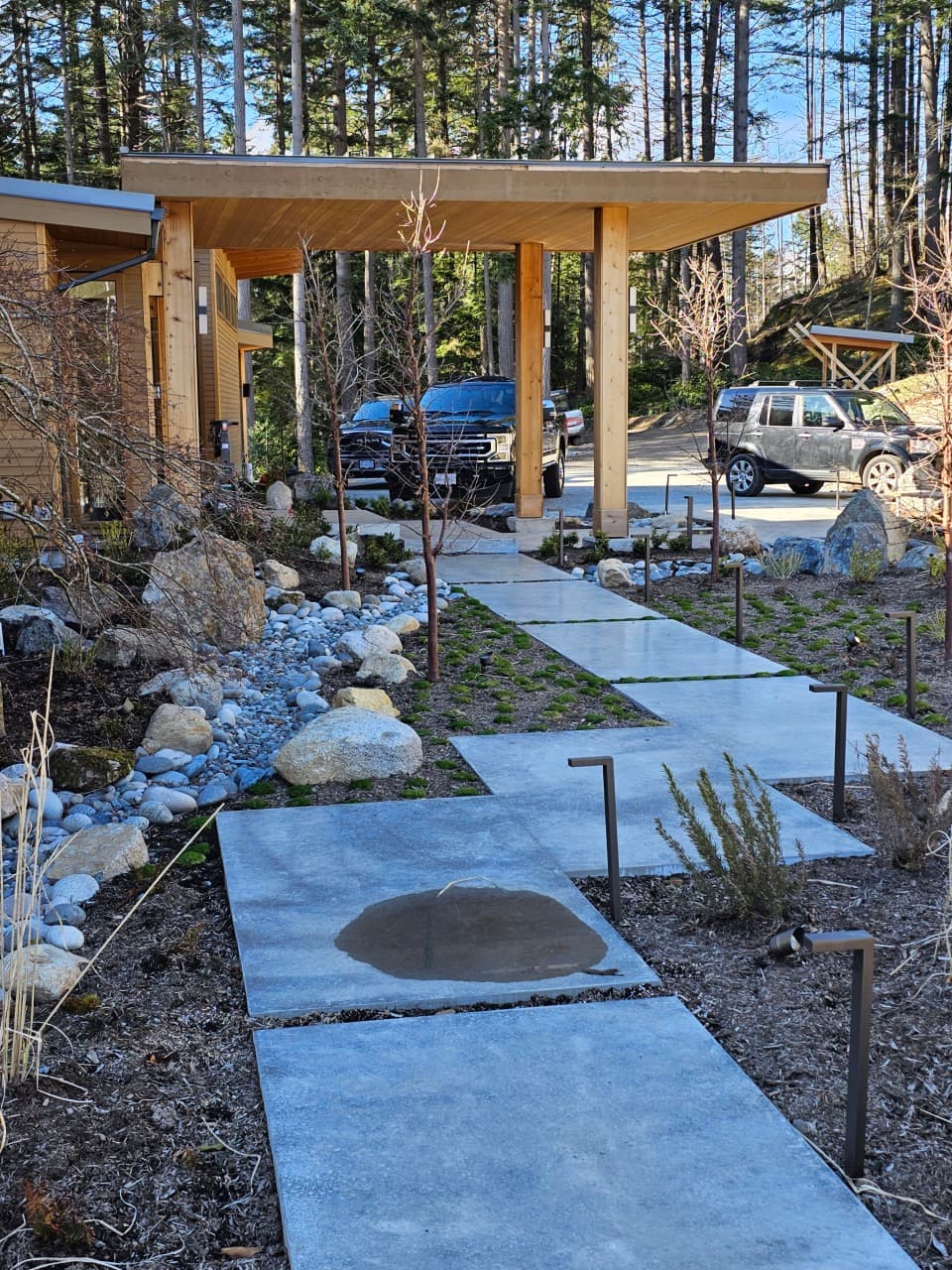
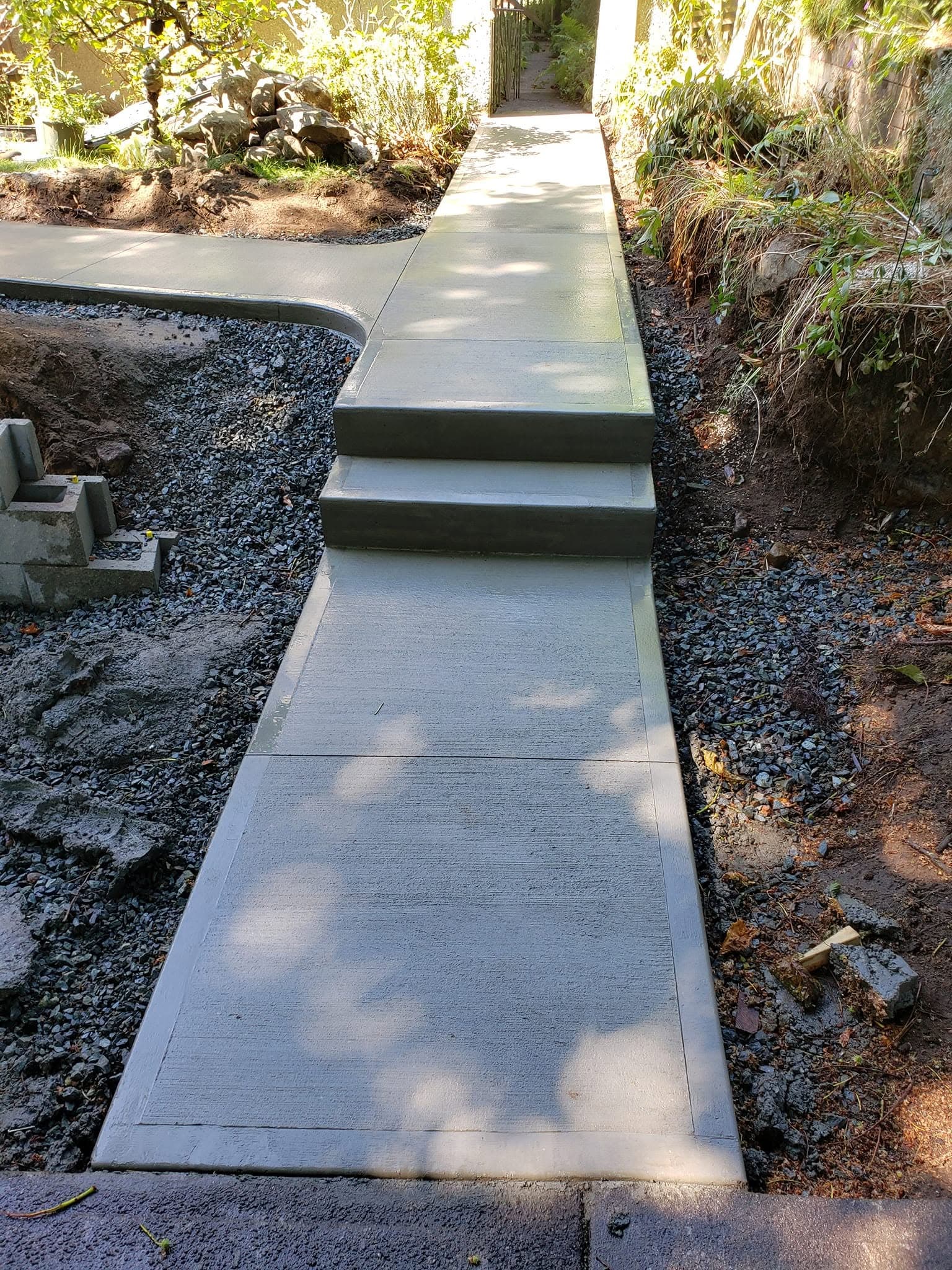
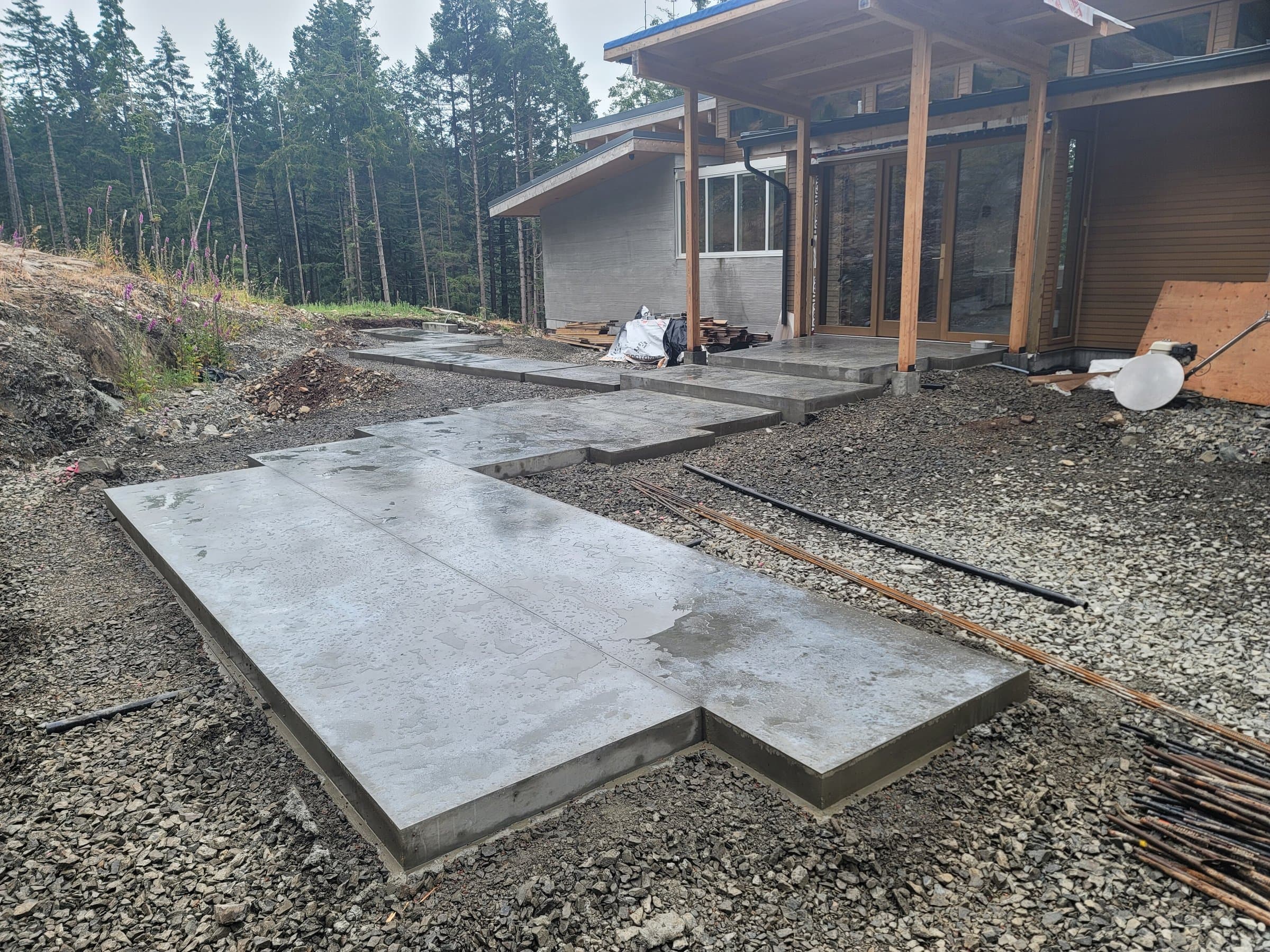
Stepping concrete walkway pads up to a covered carport. Bowen Island.
The downsides of a concrete driveway, and how they're handled
Concrete costs more to put in than asphalt or gravel, it will crack somewhere, and salt can flake the surface in the first winter. Control joints decide where the cracks go. A compacted base at the right depth stops the settling that causes the bad ones, and sealing protects the surface from salt and stains.
A new driveway also needs about a week before you park on it, so plan around the cars.
Concrete or asphalt: which lasts longer?
Concrete usually does. Asphalt costs less to put down and is quicker to drive on, but it needs sealing every few years and softens in the heat. Concrete takes less upkeep and gives you finish options. Under either one, the base decides most of the driveway's life.
City approval at the street in Maple Ridge
A new, widened or relocated driveway crossing, or a ditch infill, needs an application accepted by Maple Ridge Engineering before work starts. One primary driveway is allowed per property. Driveways need 1.5 m clearance from the property line, hydrants and poles, and 2.0 m from street trees. Where the crossing goes over a ditch, the City sizes the culvert and the applicant pays.
Source: Maple Ridge Driveway Crossing, Culvert and Ditch Infill application
More that can change the job
The details that shift the scope, the permit or the price, with the rule behind each where there is one.
Gravel to concrete
Old driveway gravel can sometimes become the base after grading and compacting. A test hole shows whether it's deep and clean enough, or has to come out.
On the lot, or crossing the boulevard
In Maple Ridge, the part between the property line and the road needs an application to Engineering, accepted before work starts.
Source: Maple Ridge Driveway Crossing, Culvert and Ditch Infill application
Wider driveway or a second one
Widening or relocating a driveway in Maple Ridge needs an application, and a second driveway needs the Director of Engineering's approval.
Source: Maple Ridge Driveway Crossing, Culvert and Ditch Infill application
Broom, stamped or exposed
Broom is the standard, grippy finish. Stamped and exposed aggregate take more crew time on pour day and need resealing to keep their look.
Cars or heavy vehicles
An RV, work truck or heavy pickup needs a thicker slab, more steel and a better base than a driveway for cars.
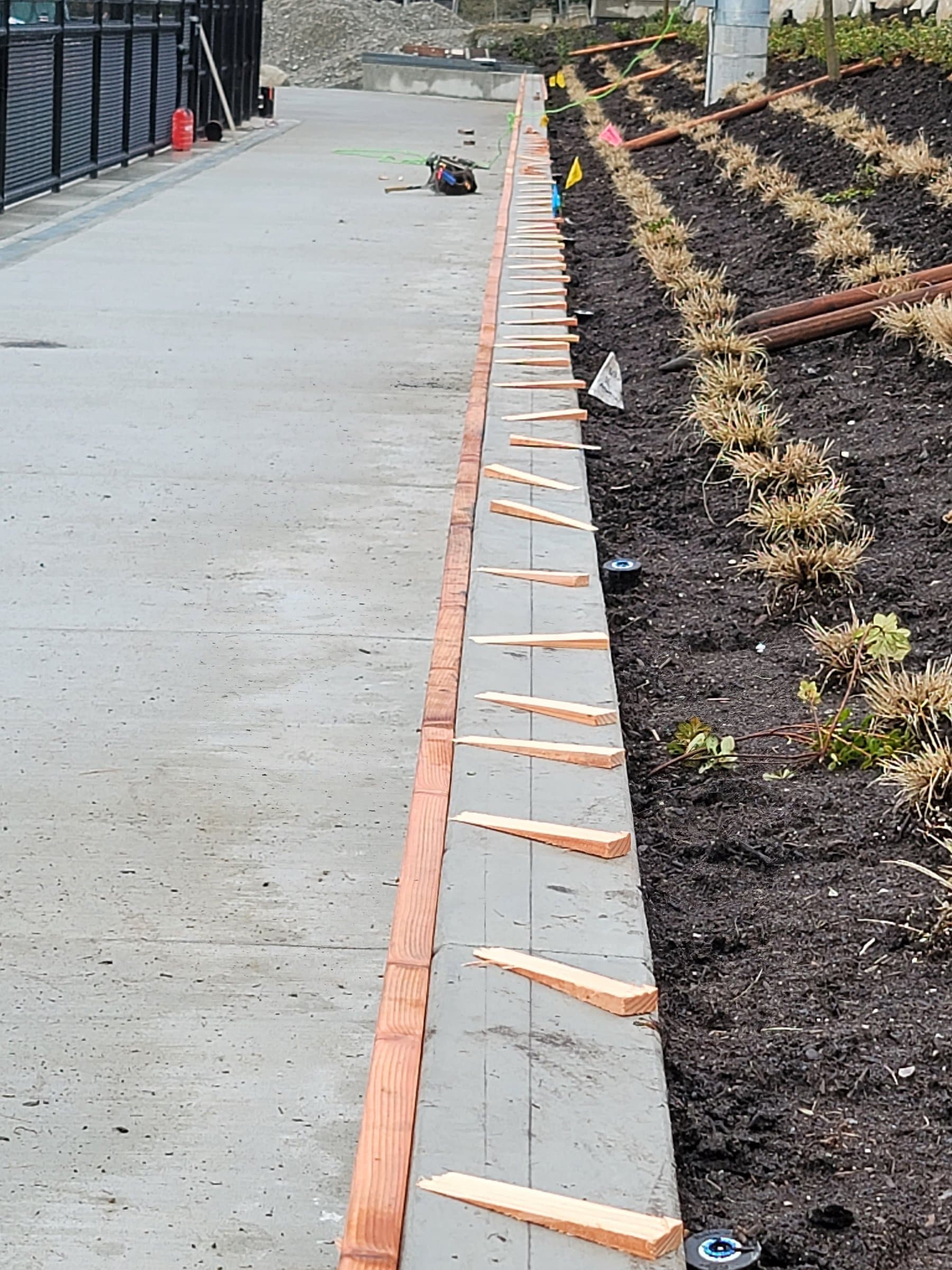
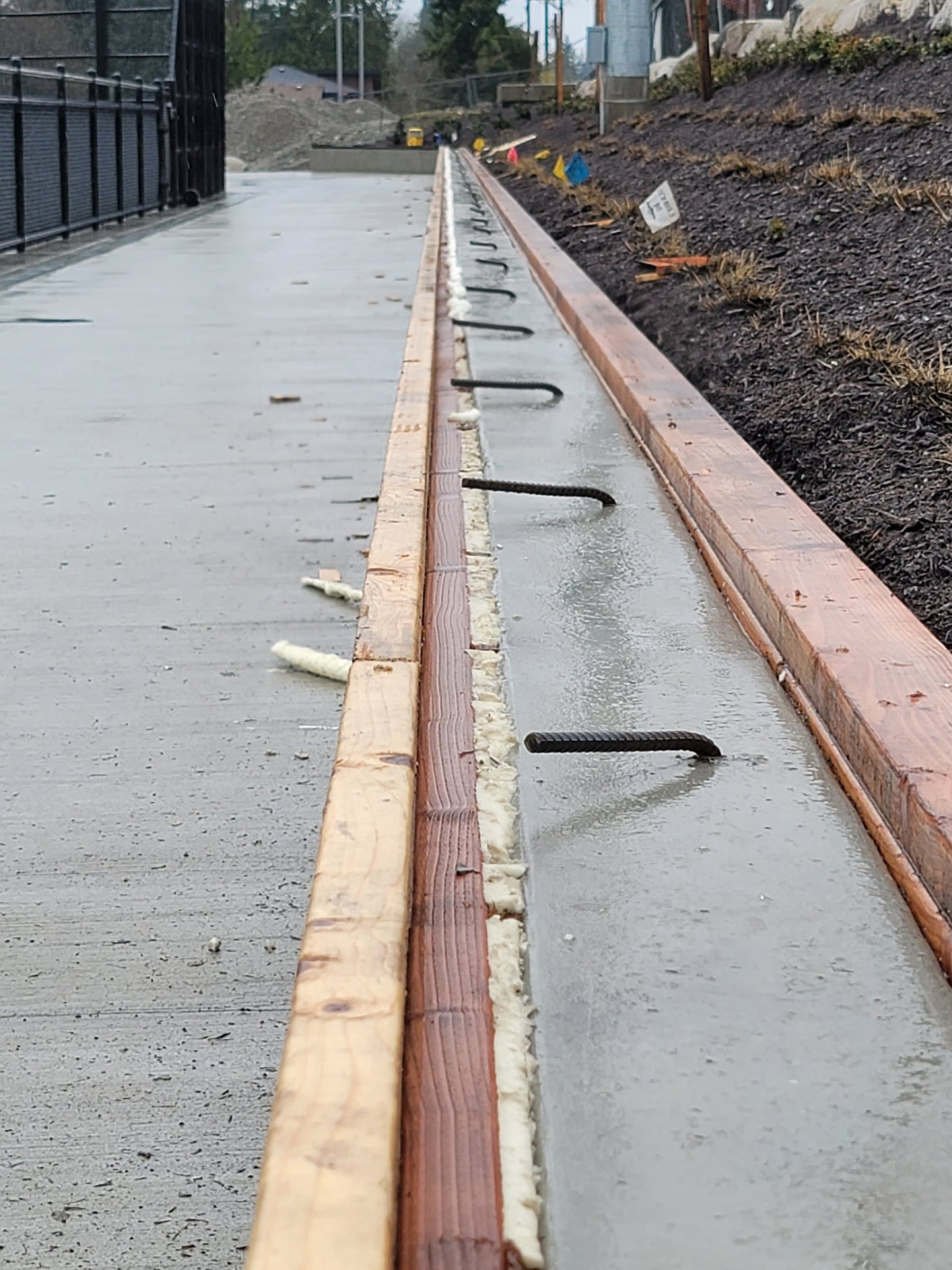
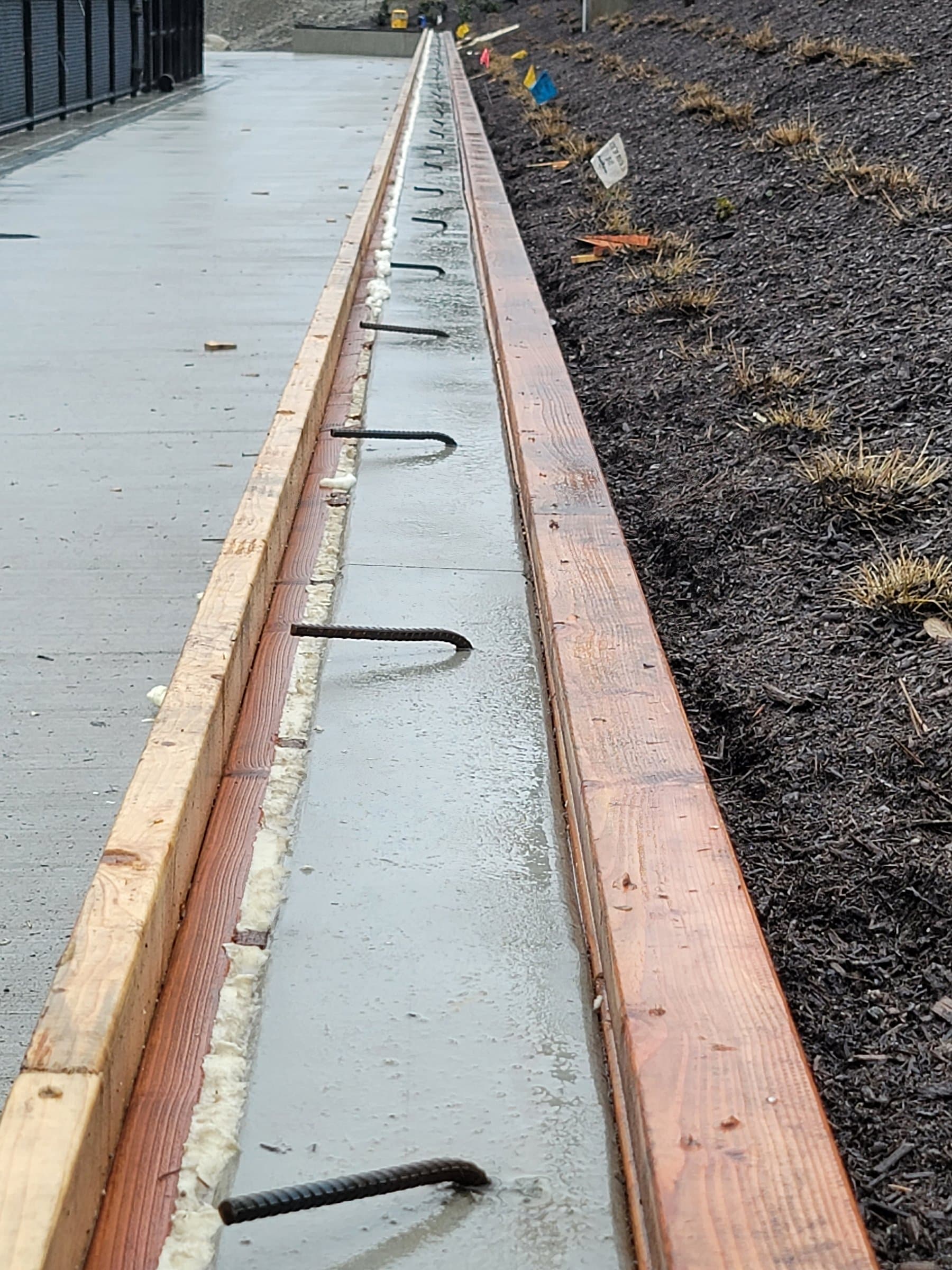
From our job sites
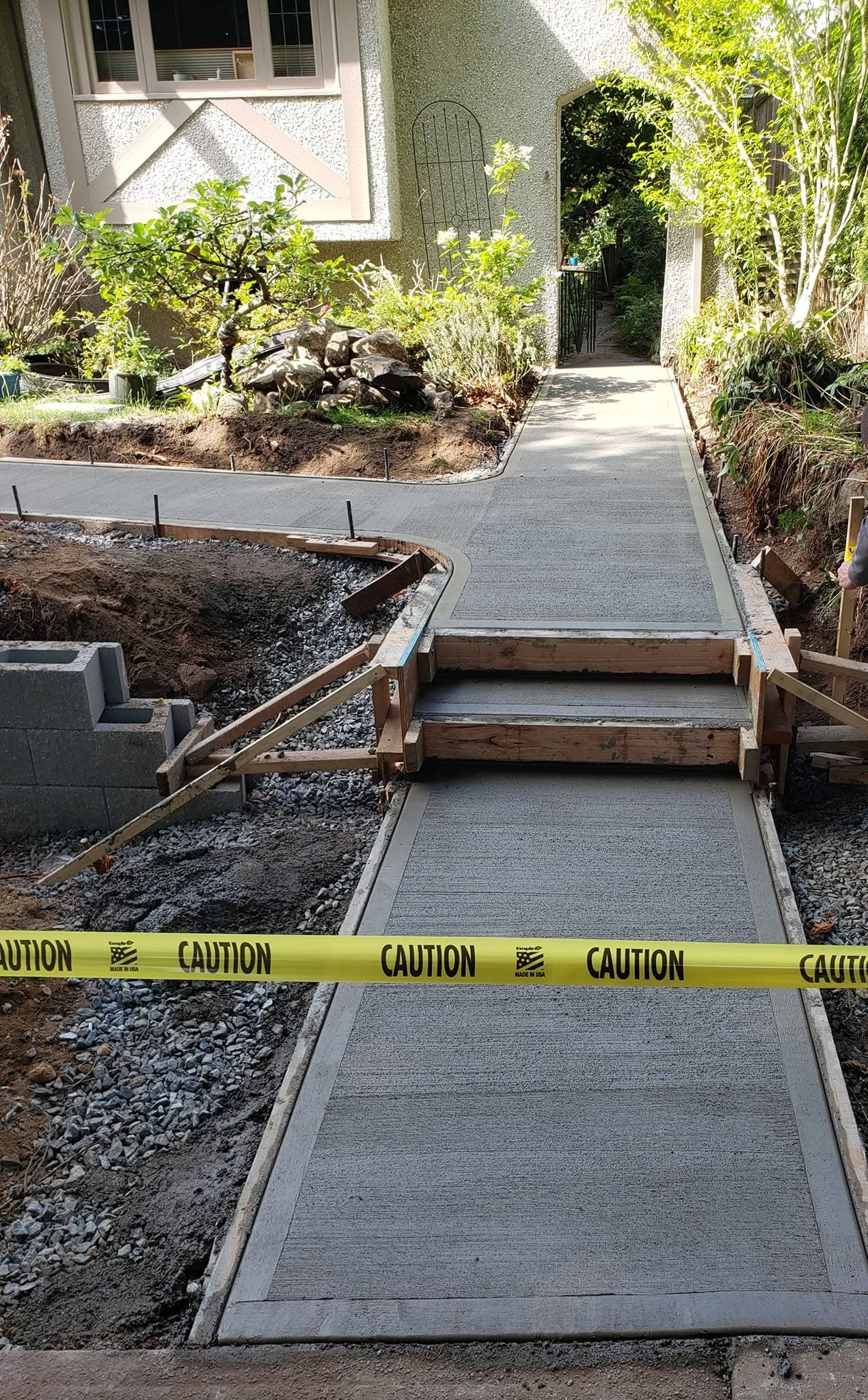
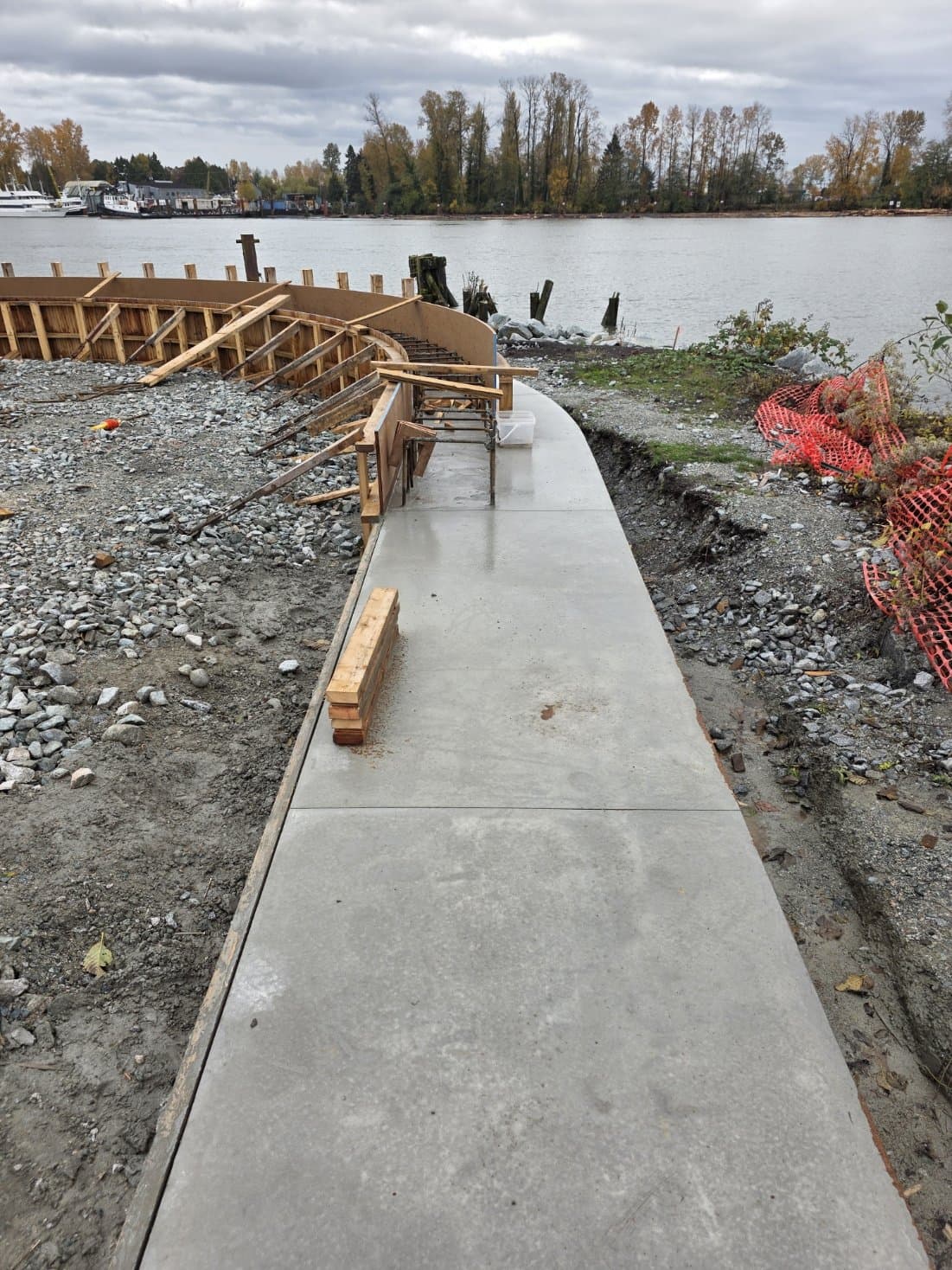
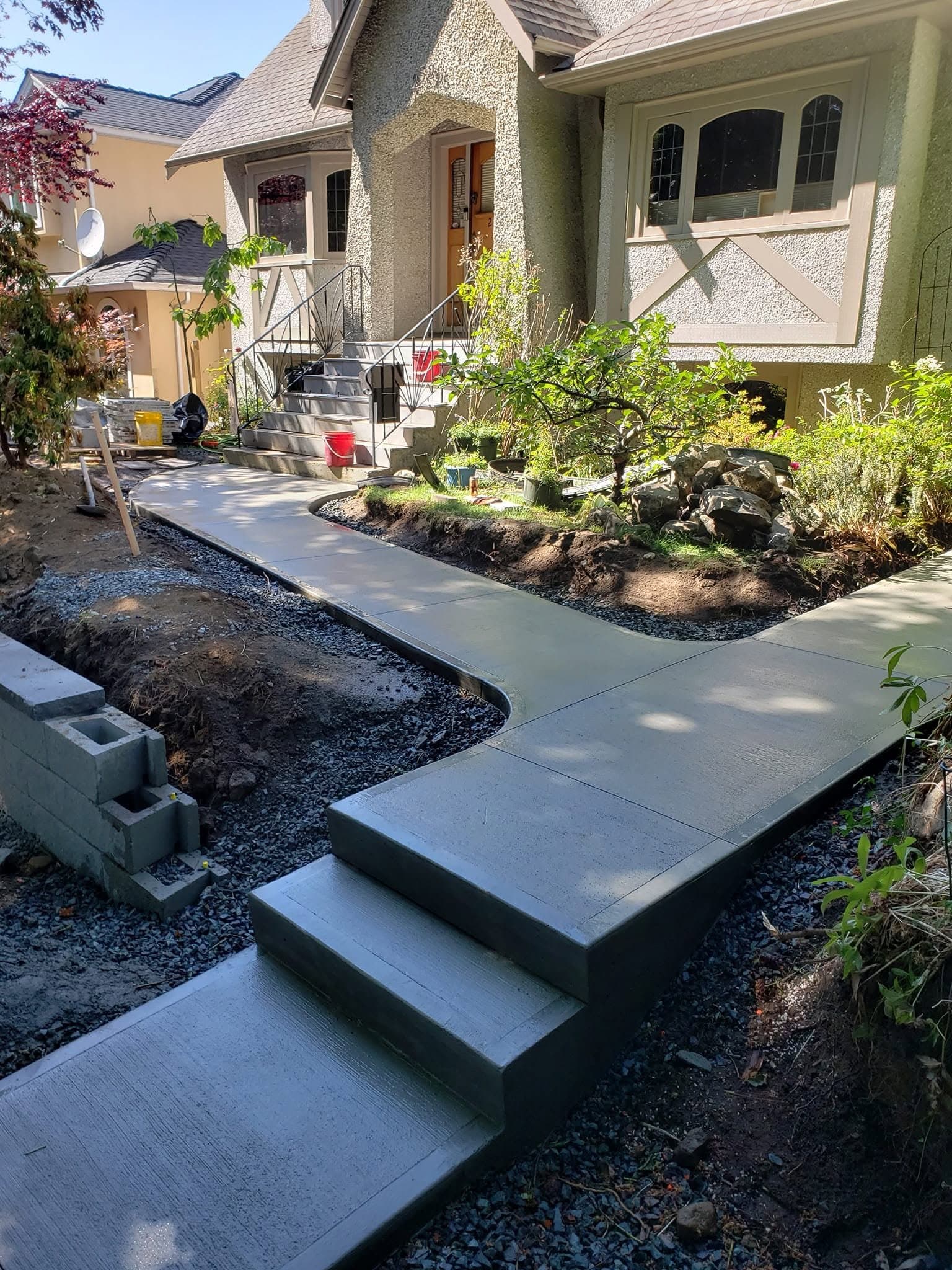
Real jobs, including the forms before the pour, which is the part you can't see once the concrete is in.
Common questions
Is it cheaper to pour concrete or asphalt?+
Asphalt usually costs less to put down. Concrete usually lasts longer and needs less upkeep, so the gap narrows over the years.
Which lasts longer, concrete or asphalt driveway?+
Concrete, on a good base. Asphalt needs resealing every few years and tends to wear out sooner.
What is the cheapest option for driveways?+
Gravel is the cheapest to put in, but it ruts and needs topping up. Of the paved options, asphalt costs less up front than concrete.
How thick should a concrete slab be for a driveway?+
Common practice is 100 mm (4 in.) for cars and 125 to 150 mm (5 to 6 in.) for heavy trucks or RVs, on a compacted gravel base. Your soil and what you park set the real spec, and we confirm it on the site visit.
Can I pour concrete over my gravel driveway?+
Sometimes the gravel can become the base after it's graded and compacted. If it's thin, mixed with soil or on soft ground, it has to come out first.
How much does a concrete driveway cost?+
It depends on size, access, digging and finish, so we give you an estimate after seeing the site. Send a photo and rough measurements with the booking form and John will tell you what drives the price on your job.
How it works
Four steps, and nothing is ordered or dug until you sign off.
Call or book a site visit
Call John, or tap Book now and send a photo of the spot with rough measurements if you have them.
Site walk
John comes out, walks the site, checks access, slope and drainage, and tells you which permits and inspections the job needs.
Plan and design
You get a clear plan, the design and a written scope and estimate. Finishes are chosen and the build date is locked in before anything is ordered or any ground is broken.
Build
Forms are set, inspected and poured. You get updates as we go and a clean site at the end.
Rather talk it through? Call John at (778) 200-8030 · All services
Builder or GC? Call John to talk through the project, or email the details and drawings to john@bedrockandcedar.com. How it works for builders