The short answer
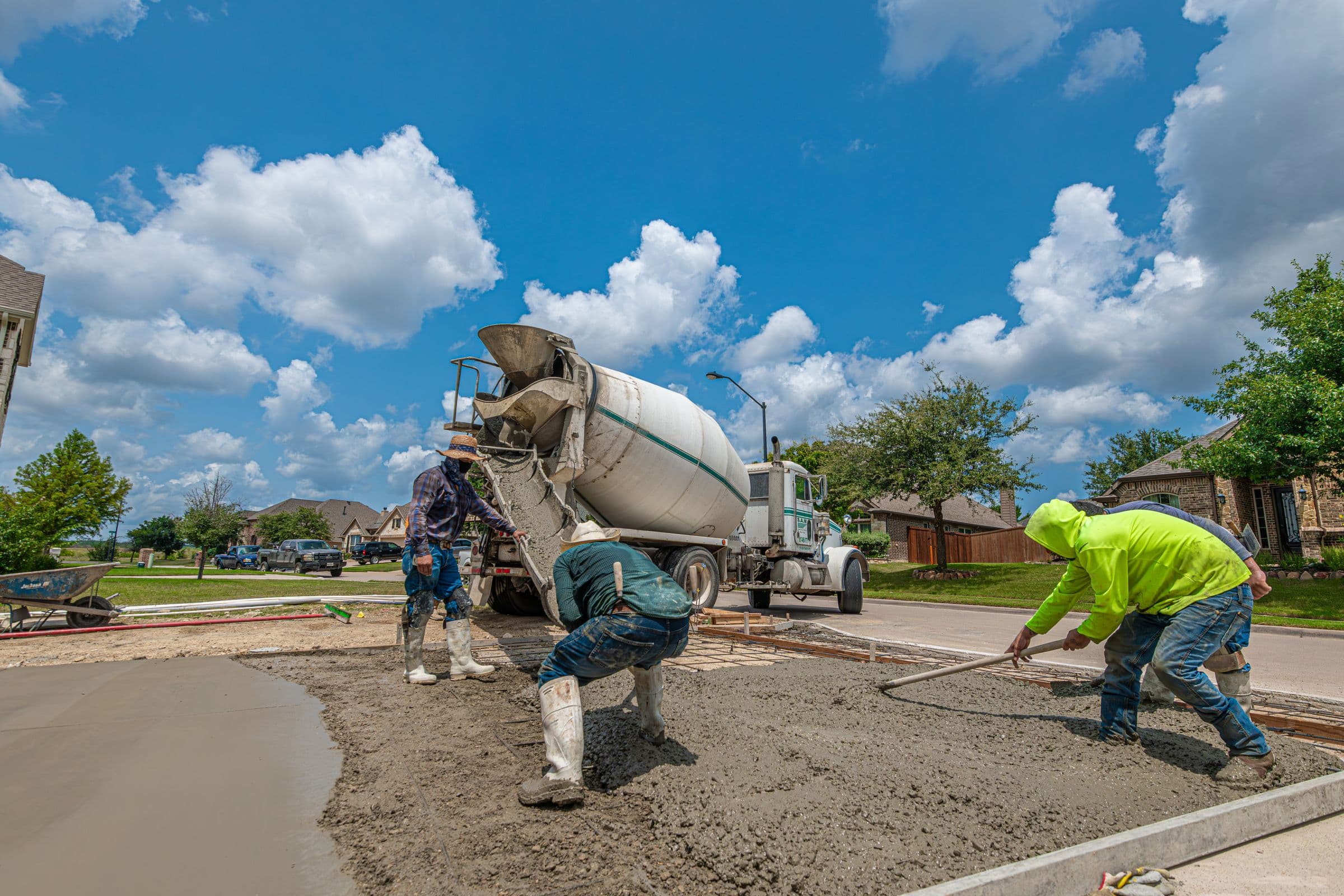
Replacing a gravel driveway with concrete means checking what's under the gravel, grading and compacting a proper base, then forming, reinforcing and pouring a slab sloped to drain. In Maple Ridge, any work on the part between your property line and the road also needs an application to the City's Engineering department first.
On this page
- What are the downsides of a gravel driveway?
- What is poor man's concrete?
- How thick should a concrete driveway be?
- Can I pour concrete over my gravel driveway?
- Broom, exposed aggregate or stamped?
- The Maple Ridge rule: the part past your property line
- What goes into a concrete driveway estimate: measuring to sending it
What are the downsides of a gravel driveway?
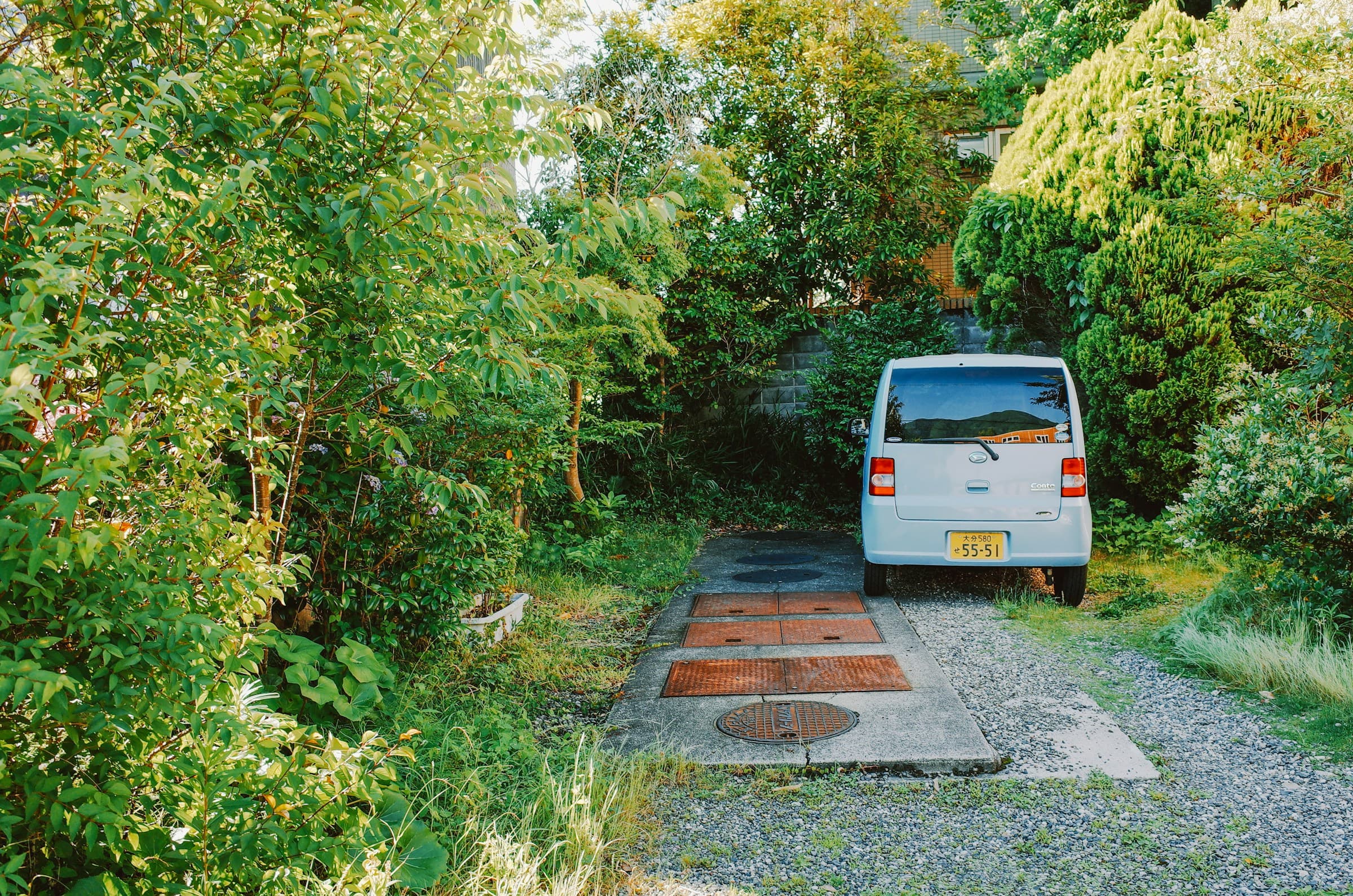
Gravel is cheap to put in and never finished. Every car that turns on it pushes stones sideways, and every heavy rain carries the fines away. Low spots hold water, the water softens the ground, and the next tire turns the soft spot into a pothole.
Over a few Fraser Valley winters that adds up to ruts, puddles, gravel in the lawn and a rake that never goes back in the shed. You top it up, regrade it and do it again. Snow clearing is harder too, because the shovel or blade picks up stones along with the snow.
What is poor man's concrete?
The name gets used loosely. Most often it means crushed gravel with the fines left in, sometimes sold as road base, that packs down hard when it's wetted and compacted. Some people also use it for gravel mixed with dry cement and watered in.
Compacted road base is the same material that sits under a good concrete driveway. That's the useful part to take away. The base does the work of carrying the load, and the surface is what you see. A concrete slab on a poor base will crack and settle the same way a gravel driveway ruts.
How thick should a concrete driveway be?
Commonly cited general practice is 100 mm (4 in.) of concrete for cars and light trucks, and 125 to 150 mm (5 to 6 in.) where a heavy pickup, RV or work truck parks. Under that sits a layer of compacted crushed gravel, often 100 to 150 mm (4 to 6 in.) deep, and more on soft ground.
Those are starting points. The soil on your lot, what you park, and the City's standards for the part at the street set the real numbers. Two other things matter as much as thickness. The slab has to slope away from the house so water runs off, and control joints have to be cut so cracks form in straight lines where they're meant to.
Can I pour concrete over my gravel driveway?
Sometimes the old gravel can become the base. It depends on what a test hole shows. If there's a good depth of clean crushed gravel on firm ground, it can be graded, topped up and compacted. If the gravel is thin, mixed with soil, or sitting on soft clay or organic material, it has to come out and be replaced.
Pouring straight onto loose, uneven gravel is the mistake to avoid. The slab ends up thicker in some spots and thinner in others, and the thin spots crack first. Before anyone digs, a utility locate through BC One Call marks any buried gas or power lines.
Broom, exposed aggregate or stamped?
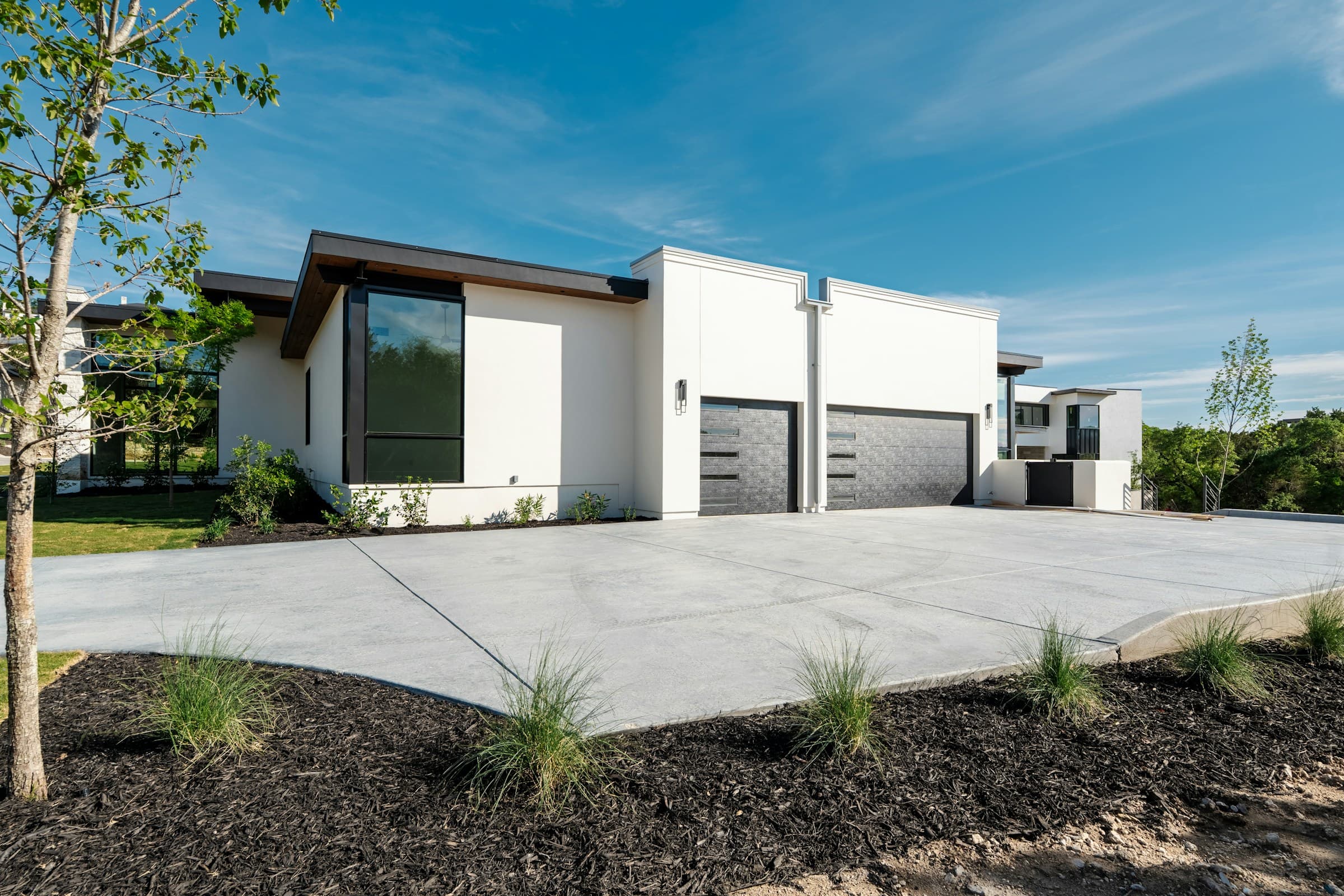
A broom finish is the standard. It's dragged with a broom before the concrete sets, which leaves fine ridges that give grip in the rain. It's the simplest to place and the easiest to look after.
Exposed aggregate has the top layer of paste washed off so the stone in the mix shows. It's grippy and hides dirt well. Stamped concrete is pressed with a pattern while it's still soft, often to look like stone or pavers, and usually coloured. Both decorative finishes take more crew time on pour day, and they generally need resealing every few years to keep their look.
The Maple Ridge rule: the part past your property line
The strip between your property line and the road is usually City land. In Maple Ridge, a new, widened or relocated driveway crossing, or a ditch infill, needs an application to Engineering, and it has to be accepted before work starts. One primary driveway is allowed per property. A second one needs the Director of Engineering's approval.
The same application sets clearances. Driveways need 1.5 m from the property line, hydrants and poles, and 2.0 m from street trees. Other cities run their own process, so check with yours if you're outside Maple Ridge.
Source: Maple Ridge Driveway Crossing, Culvert and Ditch Infill application
What goes into a concrete driveway estimate: measuring to sending it
An estimate starts with a tape and a level. Length, width, how much the driveway falls from the garage to the street, the apron, any soft spots, and where a concrete truck could park. Those numbers turn into the lines on the estimate: the area, the digging and base, the forms, the concrete and steel, and the finish.
Things that can change a driveway's price show up here too. Soft ground found when digging means more base. A truck or RV means a thicker slab and more steel. A long reach from the street can mean a pump.
To get started, send a photo of your driveway with the booking form, with rough measurements if you have them. John will tell you what it would take to turn it into concrete.
The bottom line
Replacing a gravel driveway with concrete means checking what's under the gravel, grading and compacting a proper base, then forming, reinforcing and pouring a slab sloped to drain. In Maple Ridge, any work on the part between your property line and the road also needs an application to the City's Engineering department first.
More questions
What is the lifespan of concrete?
A well-built concrete driveway on a good base commonly lasts decades. The base, drainage and the first few winters of care decide most of that.
When should you not pour concrete?
In heavy rain, on frozen ground, or when it's close to freezing without a plan to protect the slab. Rain on fresh concrete ruins the surface, and frost can damage it before it gains strength.
Can I DIY a concrete driveway?
A small pad is a reasonable DIY job. A driveway is a lot of concrete that has to be placed and finished in a few hours, so most people hire it out.
How long before I can park on a new concrete driveway?
Light foot traffic after a couple of days, cars after about a week, and full strength at around a month. The mix and the weather on pour day change the timing.
Rules differ by city. Check yours with the source links above, or ask us at the site visit.