The short answer
Hairline cracks are normal and can be sealed, and a sound slab with a worn surface can be resurfaced. A driveway that has sunk, heaved or broken into pieces has a failed base, and replacing it is the only fix that lasts.
On this page
- How big of a crack is acceptable in concrete?
- What types of cracks can you not ignore?
- Can you pour concrete over concrete to fix cracks?
- Repair, resurface or replace: which one does yours need?
- The estimate visit: measuring, crack map, then the estimate
- What replacement involves: the old slab out, then a new driveway
How big of a crack is acceptable in concrete?
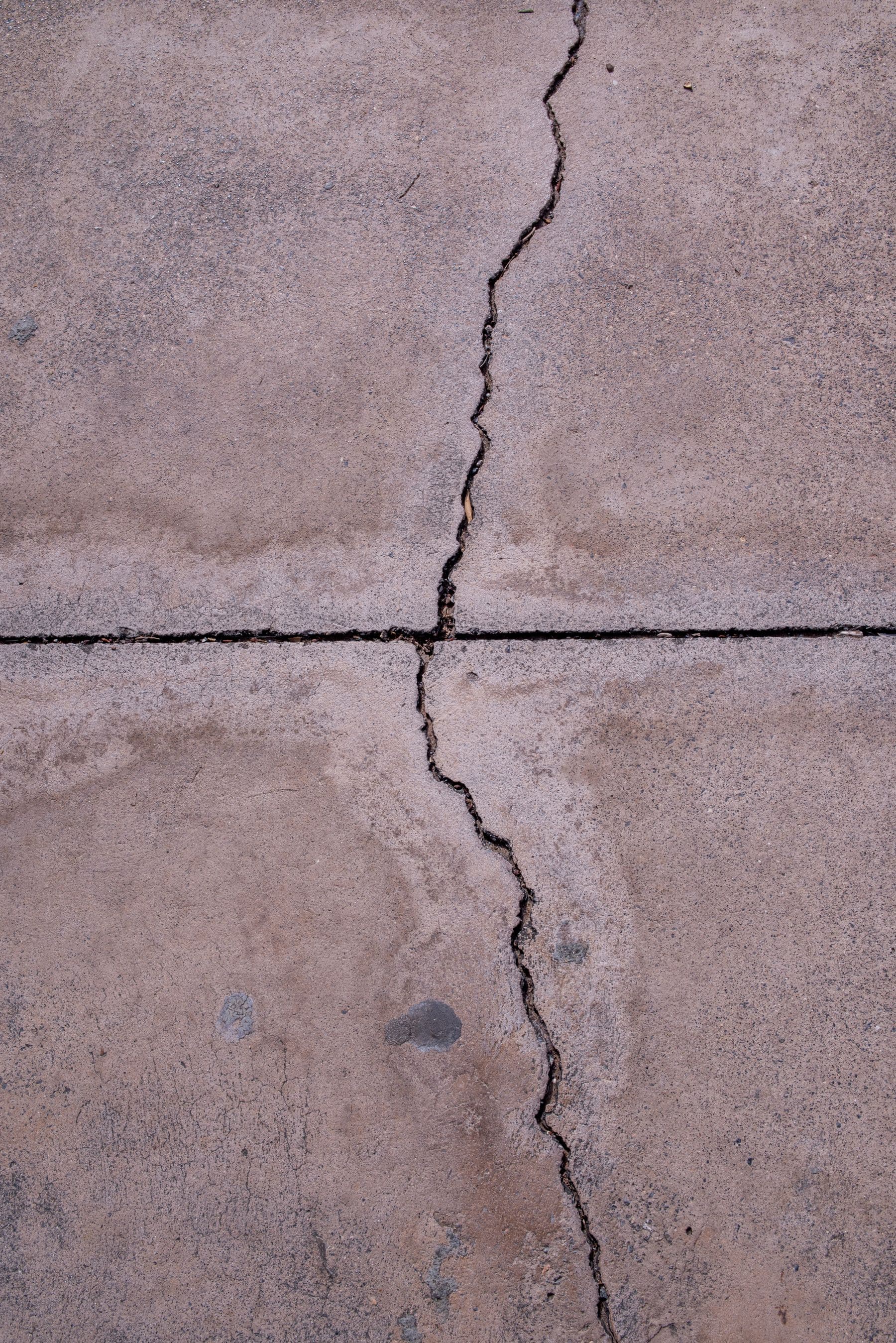
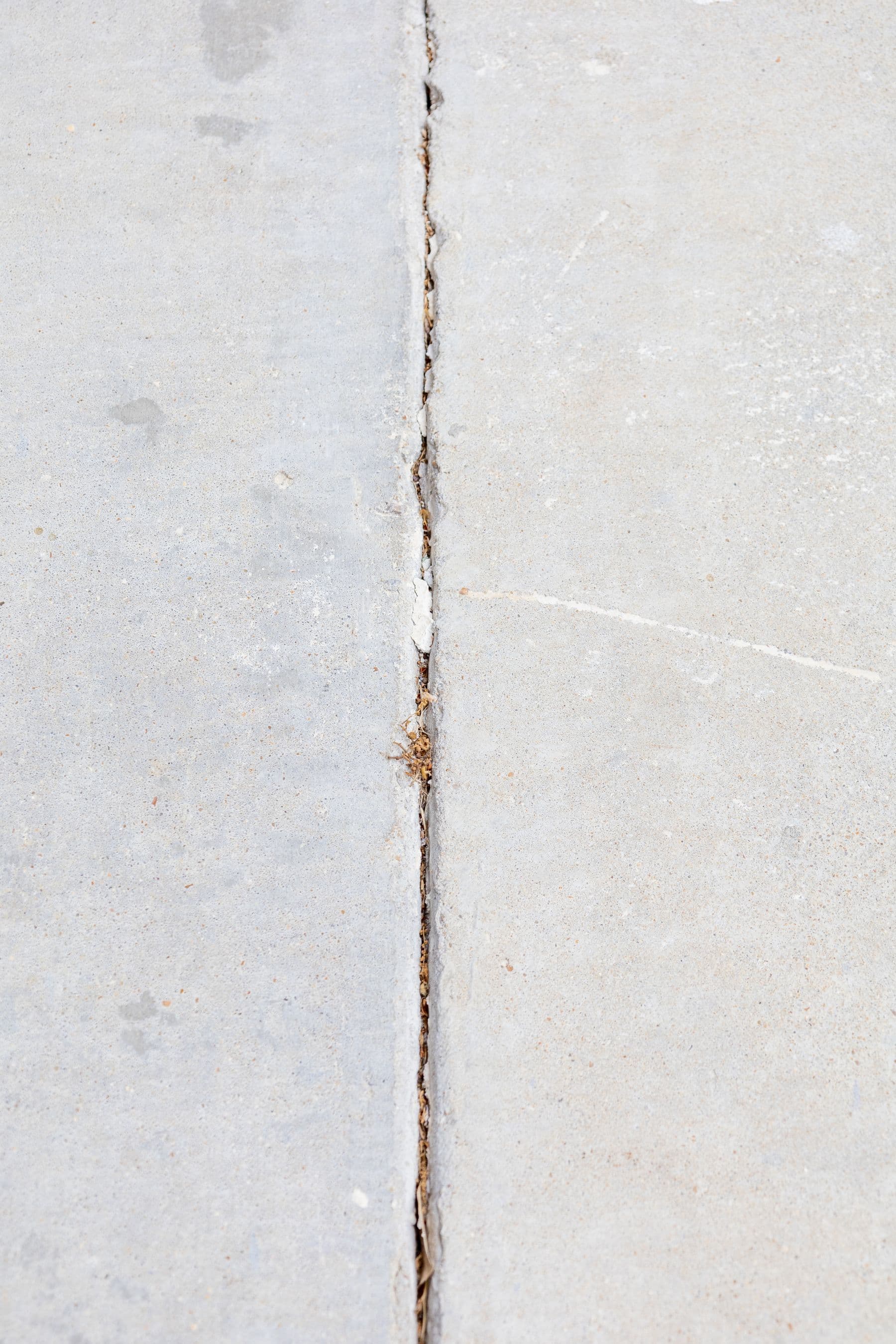
Hairline cracks, about the thickness of a bank card or less, are common in concrete and usually come from shrinkage as the slab dried. If both sides of the crack sit level and the crack isn't growing, it's cosmetic.
A rough rule of thumb is to pay attention once a crack is wider than about 6 mm (1/4 in.), or when one side sits higher than the other. Put a coin against it and check again in a few months. A crack that keeps opening is telling you the ground is moving.
What types of cracks can you not ignore?
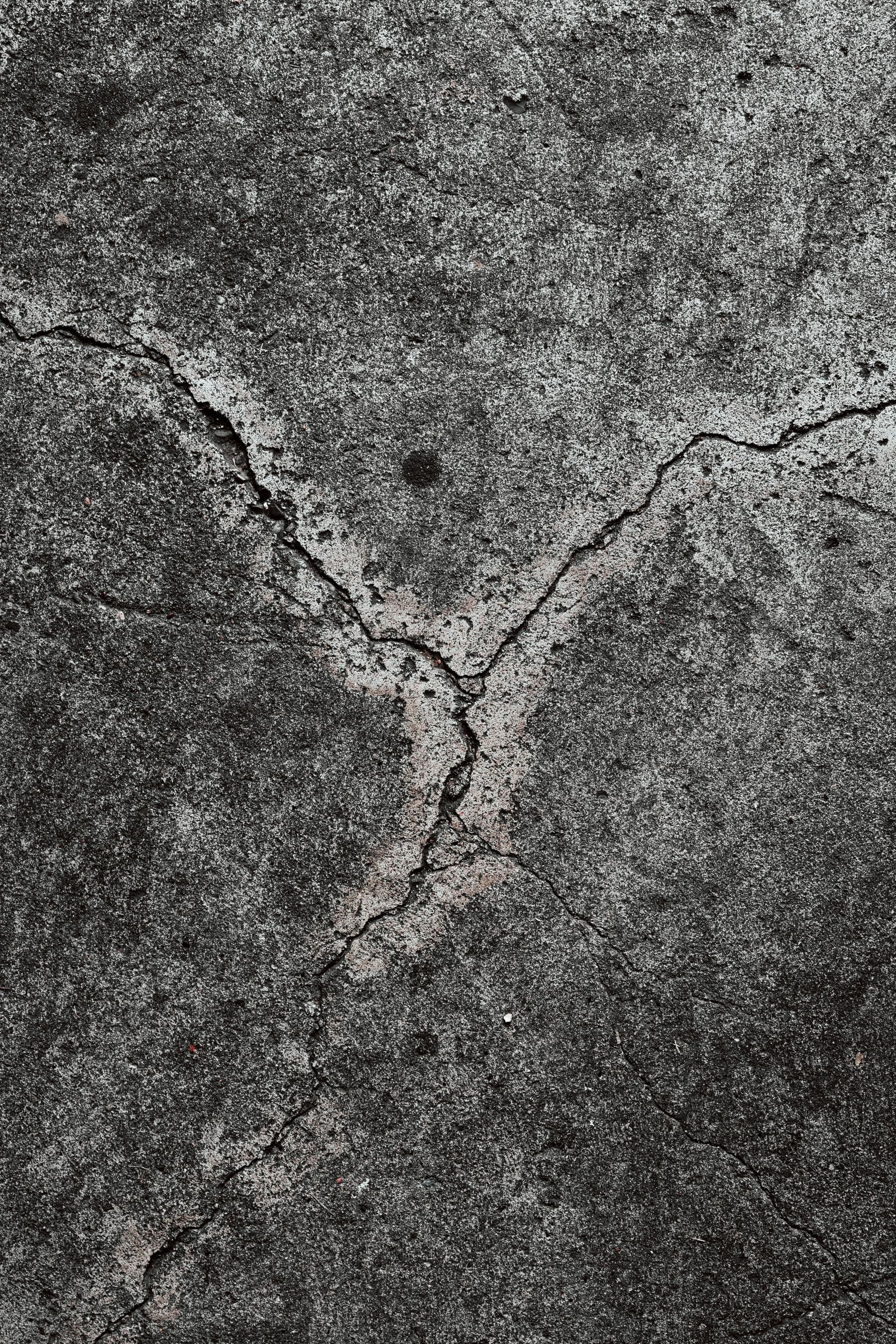
A sunken section, where a level laid across the slab shows a dip, means the base has washed out or compressed. A heaved joint, where one panel has lifted, is often tree roots or frost. Roots lifting an edge will keep lifting it.
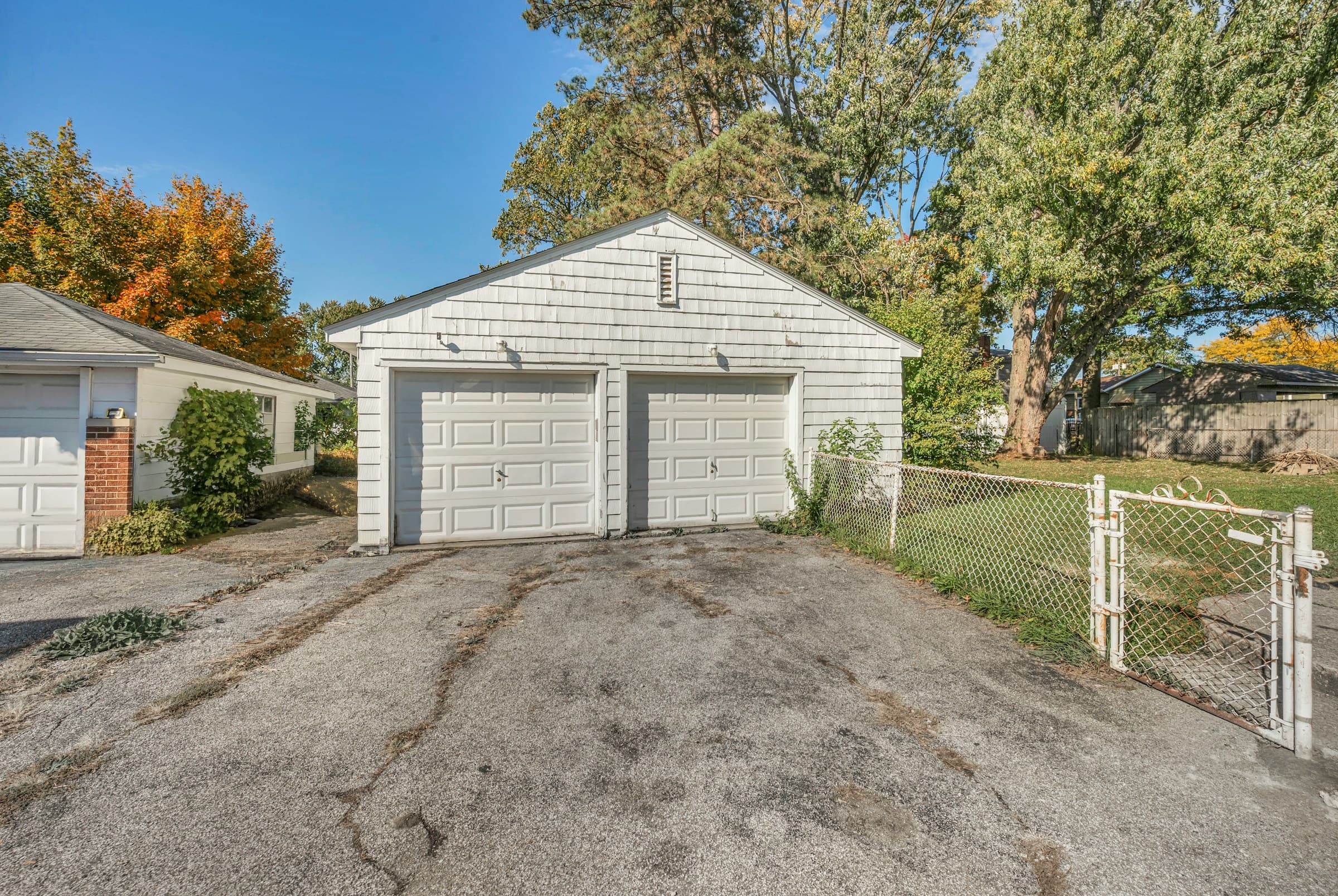
Water is the other warning sign. If water sits against the garage or runs under the slab, the ground beneath is softening. Cracks that let water in during winter get wider each freeze. Any of these means the problem is under the concrete.
Can you pour concrete over concrete to fix cracks?
Sometimes. A resurfacing overlay works on a slab that's sound and level with a worn or scaled surface. The old surface is cleaned and prepared, and a thin bonded layer goes on top.
It doesn't work on cracks that are still moving or a slab that's settling. The cracks come straight back through the new layer. An overlay also raises the surface, which can cause trouble at the garage door and the street edge.
Repair, resurface or replace: which one does yours need?
Repair means cleaning and sealing cracks, and it suits hairline and small stable cracks. Resurfacing suits a sound slab with a tired surface. Replacement is for a driveway with a failed base, wide moving cracks, or panels that have sunk or broken up.
If only one or two panels have failed, those panels can sometimes be cut out and replaced on their own. The new concrete won't match the old in colour, which bothers some people more than others.
The estimate visit: measuring, crack map, then the estimate
The visit starts like any driveway estimate. Length, width, the slope from the garage to the street, the apron and the garage edge. Each crack gets mapped and photographed so the estimate matches what's there.
A replacement estimate adds lines a new driveway doesn't have. Saw-cutting at the garage and the apron, breaking out the old slab, hauling it away and disposal.
What replacement involves: the old slab out, then a new driveway
The old driveway is saw-cut where it meets the garage and the apron, so the edges stay clean. It's broken out and hauled away, commonly to a concrete recycler. Then the base underneath gets checked, because whatever made the old slab fail has to be fixed first. A poor base, roots or bad drainage will crack the new slab the same way.
From there it's built like a new driveway, with base, forms, steel, the pour and control joints. If the replacement is wider at the street, Maple Ridge needs an application to Engineering, accepted before work starts.
Send a photo of the cracks with the booking form, with a coin beside the widest one. John will tell you whether it's a repair or a replacement.
Source: Maple Ridge Driveway Crossing, Culvert and Ditch Infill application
The bottom line
Hairline cracks are normal and can be sealed, and a sound slab with a worn surface can be resurfaced. A driveway that has sunk, heaved or broken into pieces has a failed base, and replacing it is the only fix that lasts.
More questions
Should hairline cracks in concrete be repaired?
They don't need to be for strength, but sealing them keeps water and salt out, which stops them growing in winter.
How common are hairline cracks in new concrete?
Very common. Concrete shrinks as it cures, and fine cracks often show up in the first months, ideally along the control joints.
What is the best sealant for cracks in a concrete driveway?
A flexible crack sealant made for concrete, rated for outdoor use, suits cracks that open and close with the seasons. Rigid fillers tend to pop out of cracks that move.
Can a damaged concrete driveway be repaired?
If the slab is sound and level, yes, with crack sealing or resurfacing. If it has sunk or broken up, the base has failed and replacement lasts longer.
Rules differ by city. Check yours with the source links above, or ask us at the site visit.